Genetic relationship between the gneis clasts of the Capdevila Formation in locations of El Guayabo and San Diego de los Baños
Article Sidebar
Main Article Content
Abstract
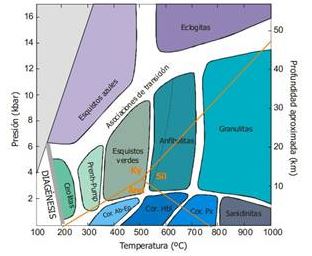
In the localities of El Guayabo and San Diego de los Baños, clasts of gneiss from the conglomeratic horizon of the Capdevila Formation have been found, the description of which is insufficiently detailed. The present work is directed to carry out a petrographic study and determining the possible existence of a genetic relation between them. The main minerals observed in the samples belong to the amphibolite facie (quartz, biotite and muscovite micas, potassium feldspar, plagioclase, garnet) for samples from the town of San Diego de los Baños, while the sample belonging to the locality of El Guayabo, is in a transitory stage between the amphibolite facie and the granulite facie, determined by the incipient development that the textures show. In the case of the San Diego de los Baños samples, the protolite that gave rise to them is essentially sedimentary, evidenced in the quartz-feldspathic and micas banding, not being so for the El Guayabo sample, whose protolite is igneous, due to the presence of zircon euhedral. After the petrographic descriptions and the studies carried out, it can be concluded that they have no genetic relationship.
Article Details

This work is licensed under a Creative Commons Attribution-NonCommercial 4.0 International License.
Those authors who have publications with this journal accept the following terms:
- The authors will retain their copyright and guarantee the magazine the right to first publish their work, which will be simultaneously subject to the Creative Commons 4.0 Recognition-NonCommercial Recognition License that allows third parties to share the work whenever it is indicate its author and its first publication this magazine. Under this license the author will be free from:
- Share - copy and redistribute the material in any medium or format
- Adapt - remix, transform and create from the material
- The licensor cannot revoke these freedoms while complying with the terms of the license
Under the following conditions:
- Recognition - You must properly recognize the authorship, provide a link to the license and indicate if changes have been made. You can do it in any reasonable way, but not in a way that suggests that you have the support of the licensor or receive it for the use you make.
- NonCommercial - You may not use the material for a commercial purpose.
- There are no additional restrictions - You cannot apply legal terms or technological measures that legally restrict what the license allows.
- Authors may adopt other non-exclusive licensing agreements for the distribution of the version of the published work (e.g., deposit it in an institutional telematic archive or publish it in a monographic volume) provided that the initial publication in this journal is indicated.
- Authors are allowed and recommended to disseminate their work through the Internet (e.g., in institutional telematic archives or on their website) before and during the submission process, which can produce interesting exchanges and increase citations. of the published work. (See The effect of open access).
The magazine is not responsible for the opinions and concepts issued in the works, they are the sole responsibility of the authors. The Editor, with the assistance of the Editorial Committee, reserves the right to suggest or request advisable or necessary modifications. The mention of trademarks of specific equipment, instruments or materials is due to identification purposes, there being no promotional commitment in relation to them, neither by the authors nor by the publisher.
References
Brust, J., Huneke, H., Meschede, M., & Sommer, M. 2010. Facies and provenance of basin-margin deposits in the Los Palacios Basin (Capdevila Formation, Cuba).
Castiñeiras, P. 2014. Láminas para las prácticas de Petrología Metamórfica. Principales minerales y texturas de rocas metamórficas. GEMM.
Cobiella Reguera, J. L. 2008. Reconstrucción palinspástica del Paleomargen Mesozoico de América del Norte en Cuba Occidenta y el sudeste del Golfo de México. Implicaciones para la evolución del SE del Golfo de México.
Domínguez, C., & Portales, Y. 2016. Variabilidad litológica de los clastos en los horizontes conglomeráticos de la Formación Capdevila en la localidad Km 5 carretera a Luis Lazo. Pinar del Río. Pinar del Río.
Instituto de Geología y Paleontología, Servicio Geológico de Cuba. 2013. Léxico Estratigráfico, La Habana.
Palmer, R. 1934. The geology of Havana, Cuba and vicinity. Journal of Geology, 123-145.
Pszczolkowski, A. 1987. Contribución a la Geología de la provincia Pinar del Río. La Habana: Científico Técnica.
Rameshwar Rao, D. (2000). Metamorphic Evolution of Charnockites and Felsic Gneisses from the Schirmacher Region, East Antarctica.Gondwana Research, 79-89.
Rojo, N. (2017). Caracterización de la composición litológica del horizonte conglomerático de la Formación Capdevila. Polígono Docente Las Terrazas. Artemisa. Pinar del Río.
Somin, M. L., & Millán, G. 1977. Sobre la edad de las rocas metamórficas cubanas. La Habana.
Somin, M. L., Lepekhina, E. N., & Tolmacheva, E. V. 2006. The El Guayabo Gneis as a probable Fragment of sialic Basament for the Cretaceous Volcanic Arc in Western Cuba. Geophysical Research Abstracts.
Yardley, B. W., MacKenzie, W. S. & Guilford, C. (1997). Atlas de rocas metamórficas y sus texturas. Masson.